




Arts & Creativity
Stay tuned for original creative work inspired by ‘dangerous women’, including:
- The first woman in England to demand a divorce
- William Wordsworth’s inspiring sister
- A 19th century astronomer who outshone her male colleagues to discover almost 400 stars.
We’ll also feature commentary and analysis on creative women across the years, from pop sensations to avant-garde painters.
Feeling artistic? Submit your own creative response to ‘what does it mean to be a dangerous woman?’


Sea Sharp’s poem presents the ambiguous figure of Calamity Jane, using the ambiguity in the form of the poetry to mimic the ambiguity in Jane’s identity.
Continue reading

Photography, Surrealism, and Beyond
By reviewing the story of Lee Miller’s life, Patricia Allmer explores how the woman artist occupies a permanently impermanent position, constantly discovered and then re-discovered.
Continue reading

Three poems by JL Williams
Through her poetry, JL Williams explores the challenge of expressing emotions freely as a woman in a patriarchal society.
Continue reading

Susanna Crossman’s short story ‘The Tally’ explores a woman’s journey to seek vengeance.
Continue reading

Eishar Sarkar quizzes family and friends from Pakistan, India and Afghanistan on what they think it means to be a dangerous woman.
Continue reading

Where dangerous women swim
Victoria Leslie explores the connection between women and water–physical and metaphorical–in myth, history and the writing of Virginia Woolf.
Continue reading

…of Williamina Fleming
On the birth date of Scottish astronomer Williamina Fleming, we present a poem in memoriam from Gerda Stevenson.
Continue reading
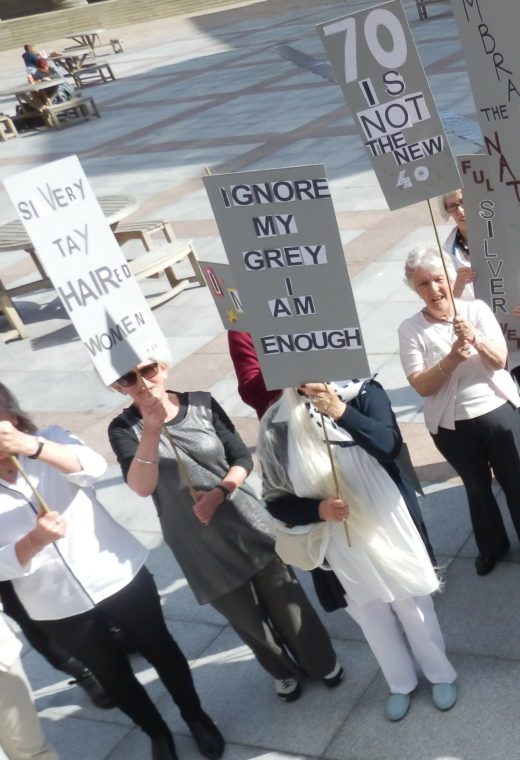
Giving greater voice and visibility to older women
Kate Clayton shares the story of the Silvery Tay-haired project, drawing public attention to the social and political issues entwined with women’s hair colour and the ageing process.
Continue reading

Lilah Grace Canevaro examines how women in Homeric epic used objects and technology as a dangerous negotiation of agency within the gender constraints of their time.
Continue reading